moonlight sonata second movement sheet music pdf
Moonlight Sonata Second Movement Sheet Music PDF: A Comprehensive Guide
Beethoven’s iconic composition attracts musicians of all levels‚ driving demand for accessible sheet music. PDF formats offer convenient download and printing options‚
facilitating practice and performance. Numerous online resources cater to this need‚ providing varied arrangements.
Understanding the Popularity of the Second Movement

Beethoven’s “Moonlight Sonata’s” second movement‚ Adagio sostenuto‚ enjoys unparalleled renown‚ transcending classical music circles to become a cultural touchstone. Its enduring appeal stems from a unique confluence of factors – a hauntingly beautiful melody‚ a deeply emotive character‚ and a relatively accessible harmonic structure‚ despite its sophisticated composition. This accessibility‚ however‚ doesn’t diminish its artistic depth; rather‚ it invites a broad spectrum of musicians to engage with the piece.

The movement’s evocative quality lends itself to diverse interpretations and arrangements‚ fueling its continued popularity. This is particularly evident in the demand for sheet music‚ with countless versions available catering to varying skill levels. The prevalence of PDF sheet music further democratizes access‚ allowing musicians worldwide to readily obtain and study the score. The piece’s frequent use in film‚ television‚ and other media also contributes to its sustained cultural relevance‚ introducing it to new audiences and inspiring further exploration.
Ultimately‚ the “Moonlight Sonata’s” second movement resonates because it taps into universal human emotions – longing‚ melancholy‚ and a sense of peaceful contemplation. It’s a piece that speaks to the soul‚ and its enduring popularity is a testament to Beethoven’s genius and the timeless power of music.
Availability of Free PDF Sheet Music
Fortunately for aspiring pianists‚ a wealth of free PDF sheet music for the “Moonlight Sonata’s” second movement is readily available online. MuseScore.com stands out as a primary repository‚ hosting numerous user-submitted arrangements ranging in quality and accuracy. These often include standard notation‚ as well as simplified versions for beginners. However‚ users should exercise caution and critically evaluate the source before relying on any free sheet music.
Other websites and online forums also offer free downloads‚ but the legality and copyright status of these sources can be questionable. It’s crucial to respect copyright laws and consider supporting composers and publishers by purchasing legitimate sheet music when possible. While free options provide accessible entry points‚ they may lack the editorial rigor and accuracy of professionally published scores.
Searching specifically for “Moonlight Sonata 2nd Movement sheet music PDF” will yield numerous results. Remember to preview the score carefully to ensure it aligns with your skill level and musical preferences. Always prioritize accuracy and clarity when selecting free sheet music for practice and performance.
MuseScore.com as a Primary Source
MuseScore.com consistently emerges as a leading platform for accessing “Moonlight Sonata” second movement sheet music in PDF format. Its extensive library boasts over a million digital sheet music pieces‚ including countless arrangements of Beethoven’s masterpiece. The site’s community-driven nature allows musicians to share‚ download‚ and print sheet music freely‚ fostering a collaborative learning environment.
Users can find arrangements tailored to various skill levels‚ from beginner-friendly simplified versions to complex‚ technically demanding scores. The platform’s search functionality enables filtering by instrument – piano‚ guitar‚ flute‚ and more – catering to diverse musical interests. MuseScore also provides features like playback and transposition‚ enhancing the learning experience.
However‚ it’s important to note that the quality of arrangements on MuseScore can vary. Users are encouraged to review scores‚ check for errors‚ and contribute feedback to improve accuracy. Despite this‚ MuseScore.com remains an invaluable resource for anyone seeking accessible and diverse sheet music options for this beloved piece.
SilverTonalities Easy Note Style Arrangements

SilverTonalities offers a specialized approach to “Moonlight Sonata” second movement sheet music‚ focusing on simplified “Easy Note Style” arrangements. These arrangements are particularly beneficial for beginner pianists or those seeking a less challenging rendition of the piece. A key feature is the inclusion of letter names embedded directly within each notehead‚ visually aiding note recognition and facilitating faster learning.
These PDF sheet music versions prioritize accessibility‚ breaking down the complex harmonies and melodies into manageable segments. SilverTonalities arrangements are available through platforms like the Carnegie Library of Pittsburgh’s OverDrive service‚ expanding their reach to a wider audience. The arrangements are designed for personal use only‚ explicitly prohibiting resale or redistribution of the content.
By simplifying the notation and providing visual cues‚ SilverTonalities empowers aspiring pianists to tackle this iconic piece with greater confidence. This approach bridges the gap between complex classical scores and beginner-level skills‚ making the beauty of the “Moonlight Sonata” accessible to a broader range of musicians.
Sheet Music Difficulty Levels: Beginner to Advanced
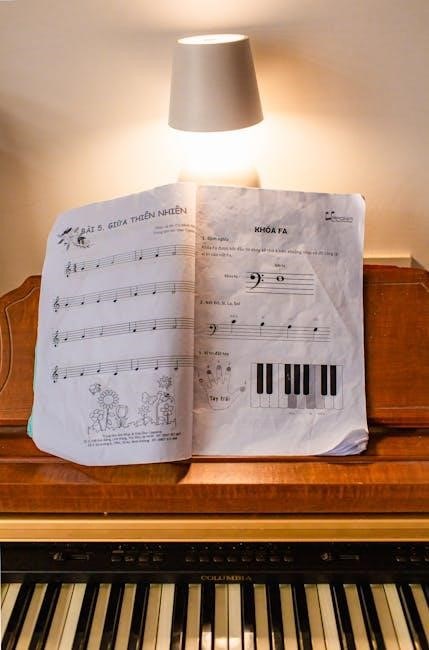
“Moonlight Sonata’s” second movement sheet music is available across a vast spectrum of difficulty levels‚ catering to pianists of all skill sets. Beginner arrangements‚ like those offered in the “Easy Note Style” by SilverTonalities‚ simplify the original composition‚ utilizing lettered notes and reduced harmonic complexity. These versions prioritize accessibility‚ allowing novices to engage with the melody.
Intermediate sheet music maintains a greater degree of fidelity to Beethoven’s original‚ introducing more complex chords and rhythmic patterns. Advanced arrangements‚ conversely‚ present the complete‚ unabridged score‚ demanding a high level of technical proficiency and musical interpretation. These often include intricate ornamentation and nuanced dynamics.
MuseScore.com hosts a diverse collection spanning these levels‚ allowing users to filter by difficulty. The choice depends on individual experience and goals; beginners should start with simplified versions‚ gradually progressing to more challenging arrangements as their skills develop. Finding the right level ensures a rewarding and achievable learning experience.
Different Formats Available: PDF‚ Print‚ Digital
“Moonlight Sonata’s” second movement sheet music is readily accessible in a variety of formats to suit diverse preferences and learning styles. The most common is PDF‚ offering instant download and compatibility across devices – ideal for viewing on tablets‚ laptops‚ or printing. MuseScore.com prominently features PDF downloads‚ enabling quick access to a vast library of arrangements.
Traditional printed sheet music remains popular for those who prefer a tactile experience and avoid screen glare. Many online retailers offer physical copies‚ providing a durable and aesthetically pleasing option. Digital sheet music‚ often accessed through dedicated apps or platforms‚ allows for interactive learning features like adjustable tempo and highlighting.
These digital formats frequently integrate playback capabilities‚ aiding in comprehension and practice. The choice between PDF‚ print‚ and digital depends on individual needs; PDF offers convenience‚ print provides a classic feel‚ and digital enhances interactivity.
Using Sheet Music for Piano Learning
“Moonlight Sonata’s” second movement‚ despite its serene quality‚ presents unique challenges for piano learners. Utilizing sheet music effectively is crucial for mastering this piece. Beginners often benefit from “easy note style” arrangements‚ like those offered by SilverTonalities‚ which embed letter names directly onto the notes‚ simplifying note recognition.
Progressive learners can transition to standard notation‚ focusing on understanding key signatures‚ time signatures‚ and dynamic markings. Careful attention to phrasing and pedal markings is essential for capturing the piece’s emotional depth. Consistent practice‚ coupled with analyzing the score‚ builds both technical proficiency and musical interpretation.
Sheet music facilitates breaking down complex passages into manageable sections. Utilizing a metronome aids in developing rhythmic accuracy. Furthermore‚ comparing different editions can reveal nuances in interpretation and fingering suggestions‚ enriching the learning experience and fostering a deeper connection with Beethoven’s masterpiece.
Beyond Piano: Arrangements for Guitar‚ Flute & More
While originally composed for piano‚ the captivating melody of “Moonlight Sonata’s” second movement has inspired countless arrangements for diverse instruments. MuseScore.com serves as a vast repository‚ offering sheet music adaptations for guitar‚ flute‚ violin‚ and even ensembles.
Guitar arrangements often transpose the piece to utilize the instrument’s unique tonal qualities‚ requiring adaptation of harmonies and voicings. Flute arrangements emphasize the lyrical nature of the melody‚ demanding breath control and precise articulation. These adaptations broaden the accessibility of Beethoven’s work‚ allowing musicians across disciplines to engage with its beauty.
Exploring these arrangements provides valuable insights into the underlying harmonic structure and melodic contours of the original composition. They also demonstrate the versatility of the piece and its enduring appeal. Whether for solo performance or ensemble playing‚ these transcriptions offer a fresh perspective on a timeless classic‚ expanding its reach beyond the piano.

Moonlight Streaming & Related Software (Moonlight App)
Moonlight is an open-source application enabling game streaming from a PC to various devices. It’s unrelated to the sheet music‚ but offers a convenient remote access solution.
Moonlight App: Streaming Games from PC to Devices
Moonlight facilitates high-quality game streaming from a Windows PC to a multitude of devices‚ including smartphones‚ tablets (like Xiaomi)‚ and even other computers. This functionality allows users to enjoy their PC gaming library on the go or on devices lacking the necessary hardware to run the games natively. The application leverages your local network‚ prioritizing a stable and low-latency connection for a responsive gaming experience.
Users have reported successful setups streaming to devices like Xiaomi tablets‚ praising the overall experience; However‚ interruptions can occur when switching between applications on the streaming device. This behavior causes the Moonlight session to disconnect‚ returning the user to the game selection menu instead of resuming gameplay where it left off. This is a common issue reported by users and requires troubleshooting to maintain a seamless streaming experience. Despite this‚ Moonlight remains a powerful tool for extending gaming accessibility.
Troubleshooting Streaming Interruptions with Moonlight
Addressing disconnections when switching apps on your streaming device is crucial for a smooth Moonlight experience. The primary cause often stems from the streaming session losing focus‚ triggering a disconnect. Several potential solutions exist‚ beginning with ensuring Moonlight is granted permissions to run in the background on your tablet or smartphone. Check your device’s battery optimization settings‚ as aggressive power saving can interrupt the stream.
Furthermore‚ verifying network stability is paramount. A weak or congested Wi-Fi signal can exacerbate the issue. Consider using a 5GHz network if available‚ or a wired Ethernet connection for the host PC. Experimenting with different streaming quality settings within Moonlight – reducing resolution or bitrate – might also alleviate interruptions. Finally‚ keeping both the host PC’s NVIDIA drivers and the Moonlight application updated can resolve compatibility issues and improve overall performance‚ minimizing unwanted disconnections.
Command Line Execution of Moonlight
Utilizing the Moonlight executable directly from the command line unlocks advanced control and automation possibilities. This method allows for scripting complex streaming scenarios‚ bypassing the graphical user interface. For instance‚ you can specify the target computer‚ application to launch‚ and various streaming parameters – such as frame rate‚ resolution‚ and bitrate – all within a single command;
This capability is particularly useful for creating automated workflows. A script could be designed to automatically connect to a specific PC‚ launch a desired game‚ and configure optimal streaming settings upon execution. Furthermore‚ command-line execution facilitates integration with task schedulers‚ enabling Moonlight to start streaming automatically at user login or during scheduled times. This provides a hands-free‚ customized streaming experience‚ tailored to individual preferences and needs‚ enhancing convenience and efficiency.
Automating Moonlight with Scripts and Task Scheduling
Leveraging the command-line interface of Moonlight opens doors to powerful automation through scripting and task scheduling. By crafting scripts – utilizing languages like Python or Bash – you can define a sequence of commands to initiate a streaming session with specific parameters. This includes targeting a particular PC‚ launching a chosen application‚ and pre-configuring resolution‚ frame rate‚ and other settings.
Integrating these scripts with task schedulers‚ such as Windows Task Scheduler or cron on Linux‚ allows for fully automated streaming experiences. For example‚ you can schedule Moonlight to automatically connect to your gaming PC and launch your favorite game upon system startup or at a predetermined time. This eliminates the need for manual intervention‚ providing a seamless and convenient way to enjoy your games on various devices. This streamlined approach enhances user experience and maximizes the potential of the Moonlight application.
Multi-Monitor Setup and Moonlight Streaming
Navigating multi-monitor configurations with Moonlight requires careful consideration of display settings on the host PC. Users have reported challenges where the streamed image extends across multiple screens‚ rendering portions inaccessible on the client device. A common workaround involves configuring the host PC to display content exclusively on a single monitor – typically the primary display – before initiating the Moonlight stream.
This ensures that the entire streamed output is contained within a single‚ manageable window on the client. However‚ this solution may necessitate adjustments to your usual desktop setup. Experimentation with display settings is often crucial to achieve optimal streaming performance in a multi-monitor environment. Understanding how Moonlight interacts with your specific hardware and software configuration is key to a smooth and enjoyable streaming experience‚ avoiding fragmented or unusable displays.
Optimizing Resolution and Frame Rate in Moonlight
Achieving a smooth and responsive streaming experience with Moonlight hinges on carefully balancing resolution and frame rate settings. Higher resolutions demand more bandwidth and processing power‚ potentially leading to lag or stuttering if your network or hardware isn’t up to the task. Conversely‚ lower resolutions may result in a blurry or pixelated image.
Experimentation is vital to find the sweet spot for your specific setup. Moonlight allows for granular control over these parameters‚ enabling you to tailor the stream to your client device’s capabilities and your network conditions. Utilizing command-line execution‚ as mentioned‚ provides even greater flexibility‚ allowing for scripted adjustments to resolution‚ frame rate‚ and bitrate. Prioritizing a stable frame rate over maximum resolution often yields a more enjoyable gaming experience‚ minimizing input lag and ensuring fluid gameplay.
Legal Considerations: Personal Use of Sheet Music
Downloading and utilizing sheet music‚ even in PDF format‚ is subject to copyright law. While many websites offer free sheet music‚ such as MuseScore.com‚ it’s crucial to understand the terms of use associated with each source. Generally‚ these resources permit free access for personal‚ non-commercial use – meaning you can download and play the music for your own enjoyment or practice.
However‚ distributing‚ reselling‚ or performing the sheet music publicly without proper licensing is a violation of copyright. Arrangements like those from SilverTonalities explicitly state that purchased materials are for personal use only‚ prohibiting any form of resale. Respecting these terms ensures continued access to free and affordable sheet music resources for all musicians. Always verify the licensing agreement before utilizing any downloaded material‚ safeguarding against potential legal issues.

Leave a Reply